
About Course
Topic: Clinical
CEU: 1.5 units
Contact Hours: 15 hours
Current Evidence-Based Protocols and Clinical Application
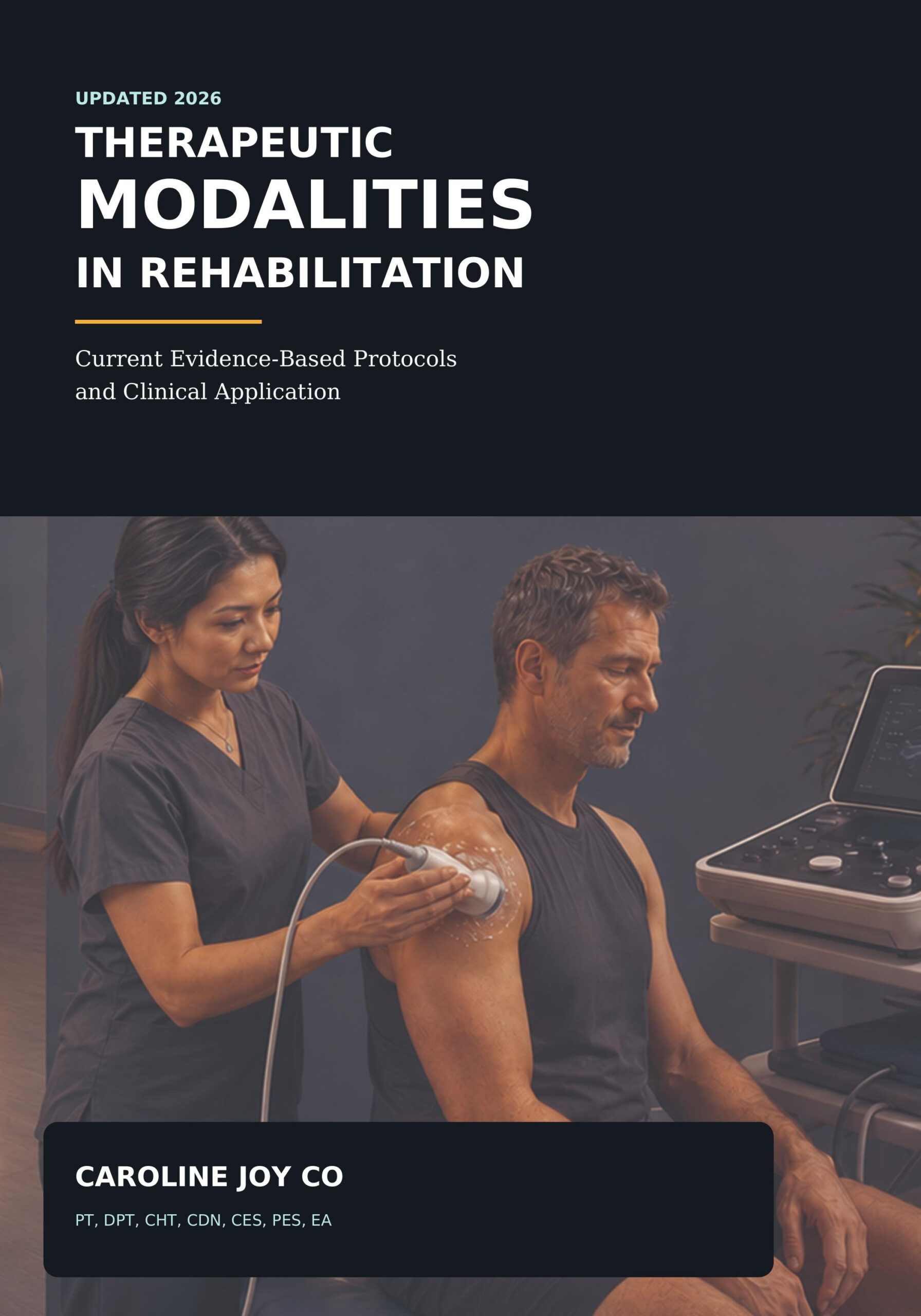
Therapeutic Modalities in Rehabilitation is an evidence-based clinical course for rehabilitation professionals who use physical-agent and device-based interventions as part of patient care.
This course reviews the contemporary role of therapeutic modalities in rehabilitation, with emphasis on clinical reasoning, patient selection, safety screening, contraindications, precautions, red flags, dosage, treatment response, reassessment, documentation, and defensible clinical application.
This course covers:
• Clinical reasoning before selecting a modality
• Interpreting evidence and building a defensible treatment rationale
• Screening, contraindications, precautions, and red flags
• Dose, treatment response, reassessment, and documentation
• Superficial heat and cryotherapy
• Contrast therapy, paraffin, and fluidotherapy
• Compression and edema management
• Continuous passive motion
• Mechanical traction and spinal decompression claims
• Whirlpool, extremity immersion, and hydrotherapeutic safety
• Electrotherapy foundations
• TENS, IFC, NMES, and FES
• High-voltage pulsed current and electrical stimulation for wounds and tissue recovery
• Biofeedback and iontophoresis
• Therapeutic ultrasound and phonophoresis
• Shortwave diathermy and pulsed electromagnetic field therapy
• TECAR/CRET radiofrequency therapy
• Photobiomodulation, low-level light, and Class IV laser
• Extracorporeal shockwave and radial pressure-wave therapy
• Pain modulation and symptom relief
• Edema, wound, and tissue recovery
• Muscle activation, motor control, and functional performance
• Mobility, stiffness, and postoperative recovery
• Regional and diagnosis-specific evidence matrices
• Medication, procedure, and device coordination
The purpose of this course is to help clinicians use therapeutic modalities selectively, safely, and defensibly. The course emphasizes that a modality is not a complete plan of care by itself; it must support a defined clinical objective, use a reproducible dose, remain accountable to patient-important outcomes, and fit within the clinician’s scope, training, and patient-specific safety needs.
The book includes 27 chapters, a protocol and evidence toolkit, a contraindication and precaution matrix, a parameter and dose worksheet, treatment-response log and documentation models, a device-output glossary, a condition-evidence matrix summary, coding and coverage resources, selected authoritative sources, and index.
Course Content
Course Content
-
Therapeutic Modalities in Rehabilitation Course Content