

About Course
Topic: Clinical
CEU: 1.5 units
Contact Hours: 15 hours
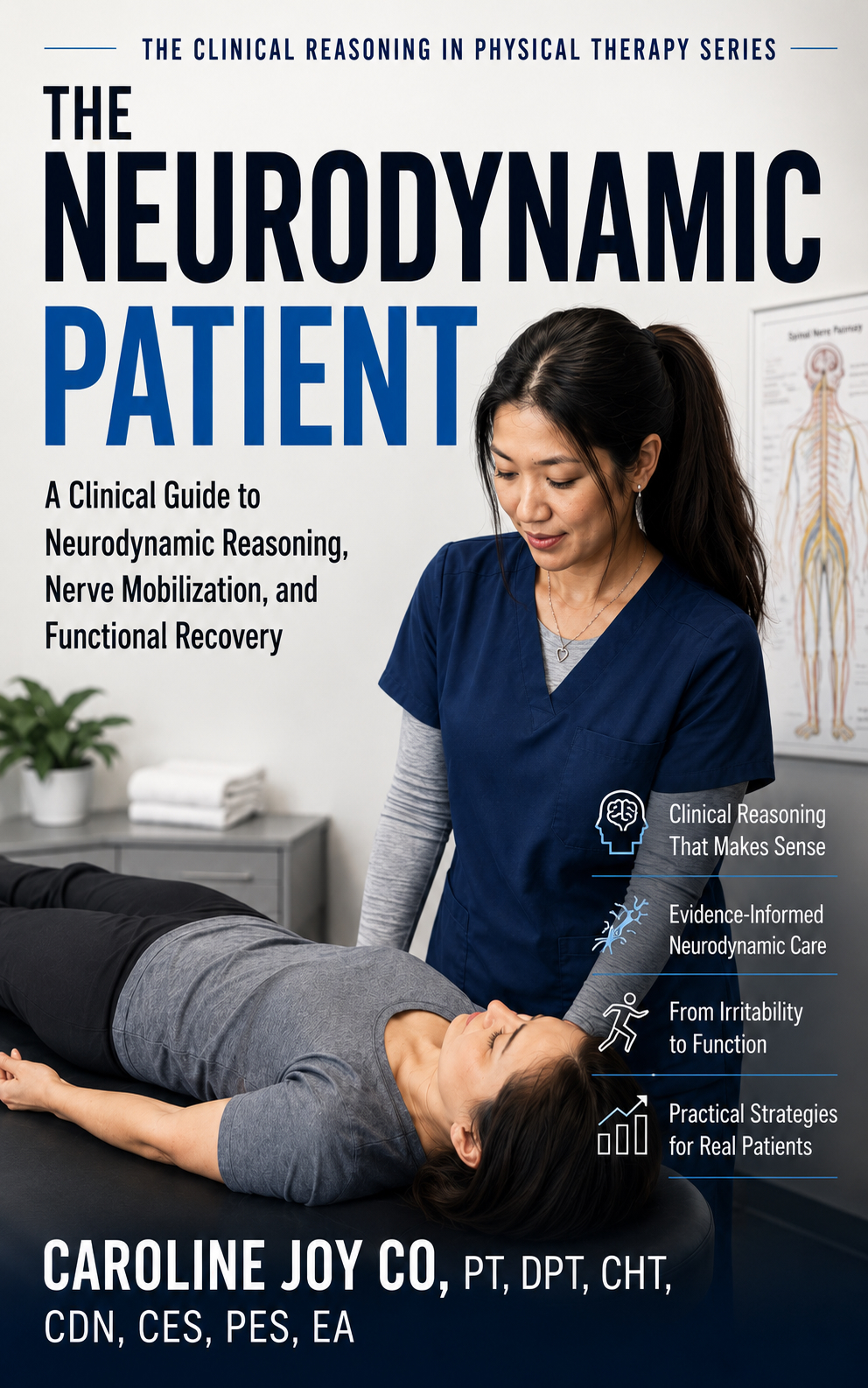
A Clinical Guide to Neurodynamic Reasoning, Nerve Mobilization, and Functional Recovery
Updated with Current Research Through 2026
The Clinical Reasoning in Physical Therapy Series
The Neurodynamic Patient is a clinical reasoning guide for physical therapists and rehabilitation professionals who treat patients with nerve-related symptoms, radiating pain, tingling, numbness, burning, and movement sensitivity.
Nerve mobilization is often taught as a set of tests and exercises: straight leg raise, slump, upper limb neurodynamic testing, median nerve glides, ulnar nerve glides, sciatic sliders, and tensioners. But real patients rarely present as simple technique problems. A patient with posterior thigh “tightness” may not need another hamstring stretch. A patient with hand tingling may not have a purely wrist-based problem. A patient with a positive neurodynamic test may not be ready for nerve glides at all.
This book teaches clinicians to think before they mobilize.
Using the framework CALM → GLIDE → LOAD, Dr. Caroline Joy Co presents a practical approach to deciding when a patient needs symptom calming, gentle nerve movement, progressive loading, activity modification, or medical referral. The book emphasizes safety screening, irritability, symptom behavior, dosage, twenty-four-hour response, and the transition from nerve mobility to functional recovery.
Inside, readers will find clinical reasoning for:
• Cervical and lumbar radiculopathy
• Median, ulnar, radial, sciatic, femoral, tibial, and common fibular nerve presentations
• Thoracic outlet and brachial plexus reasoning
• Double crush and multi-site nerve sensitivity
• Post-surgical and post-traumatic nerve sensitivity
• Sensitized nervous system presentations
• Sliders versus tensioners
• Neurodynamic testing without overprovoking symptoms
• Documentation, patient education, reassessment, and progression
Rather than presenting nerve glides as isolated exercises, The Neurodynamic Patient places neurodynamic care inside a complete rehabilitation process. The goal is not simply to improve a test position. The goal is to help patients restore movement tolerance, rebuild strength and function, and trust their bodies again.
Written for physical therapists, physical therapist assistants, rehabilitation clinicians, students, educators, and clinical instructors, this book offers a practical and evidence-informed approach to neurodynamic reasoning updated with current research through 2026.
Part of The Clinical Reasoning in Physical Therapy Series, The Neurodynamic Patient is designed for clinicians who want to move beyond protocols and treat nerve-related symptoms with greater clarity, safety, and clinical judgment.
Course Content
Table of Contents
-
The Neurodynamic Patient Course Content