About Course
Topic: Clinical
CEU: 1.5 units
Contact Hours: 15 hours
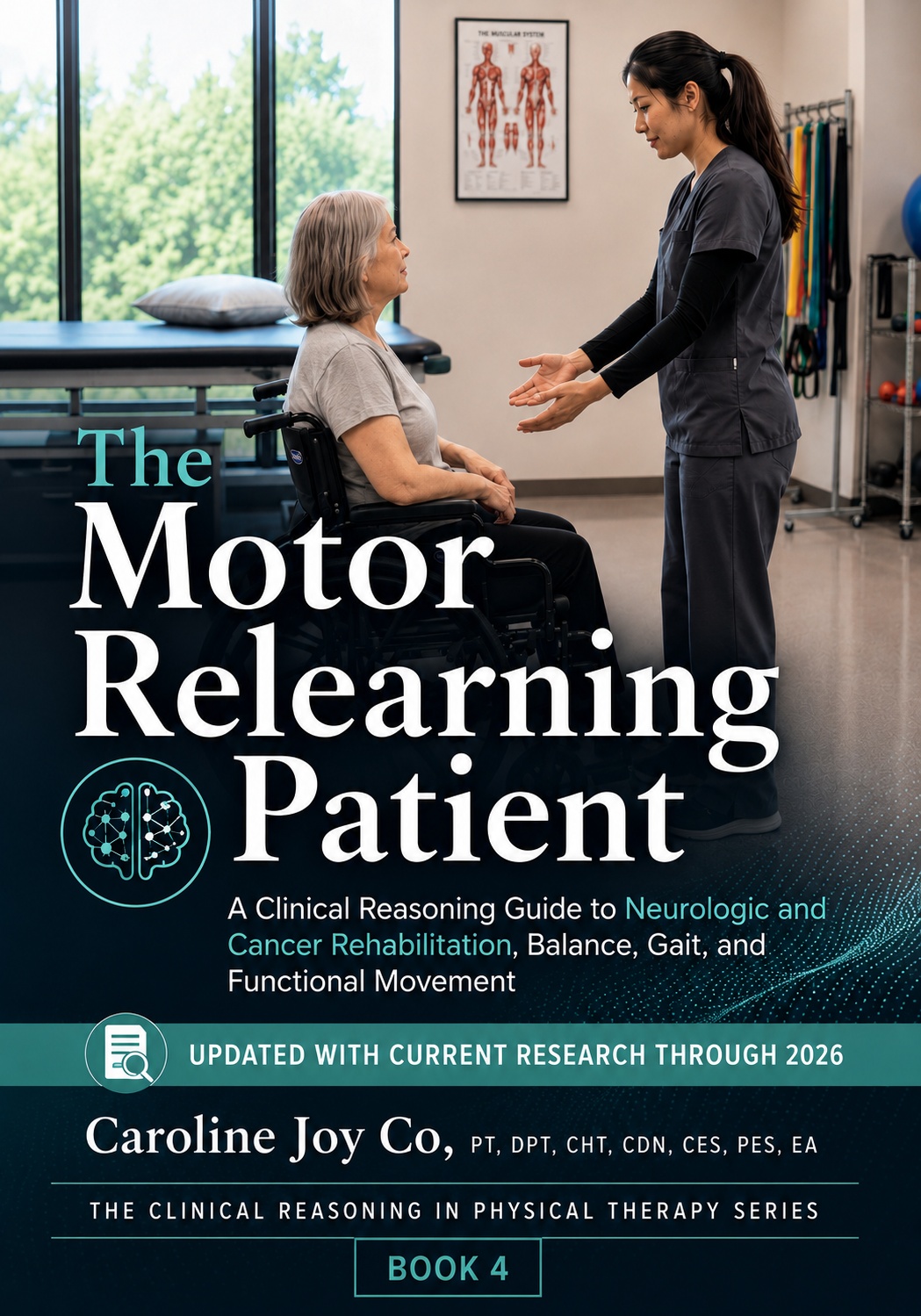
A Clinical Reasoning Guide to Neurologic and Cancer Rehabilitation, Balance, Gait, and Functional Movement
Updated with Current Research Through 2026
The Clinical Reasoning in Physical Therapy Series
The Motor Relearning Patient is a clinical reasoning guide for physical therapists and rehabilitation professionals who work with patients whose movement has stopped being automatic, efficient, safe, adaptable, or trusted.
The course applies motor relearning principles to patients recovering from stroke, traumatic brain injury, cancer treatment, radiation-related changes, steroid myopathy, prolonged hospitalization, deconditioning, fatigue, balance impairment, gait dysfunction, and medical complexity.
Rather than organizing treatment around isolated exercises or rigid diagnosis-based protocols, this course teaches clinicians to observe the functional task first. Learners examine how strength, sensation, timing, coordination, balance, endurance, attention, cognition, confidence, fatigue, fear, and the environment interact to shape movement.
Clinical applications include:
• Bed mobility, rolling, and supine-to-sit
• Sitting balance and midline control
• Sit-to-stand training
• Standing balance and weight shifting
• Gait relearning
• Stairs, curbs, turns, and transitional walking
• Reaching, grasping, and upper-extremity use
• Dual-tasking and real-world movement
• Stroke rehabilitation
• Traumatic brain injury rehabilitation
• Cancer rehabilitation
• Post-radiation rehabilitation
• Steroid myopathy
• Medically complex and deconditioned patients
• Task selection, cueing, repetition, feedback, and fatigue-based dosing
• Home programs that transfer into daily life
The course emphasizes purposeful, task-specific practice that is individualized according to safety, medical status, fatigue, cognition, functional goals, and patient response.
Learners are encouraged to ask:
What task is limited?
What movement strategy is the patient practicing?
Is the compensation useful, temporary, unsafe, or preventing recovery?
What changes when fatigue occurs?
What cue or practice condition actually helps?
How can the task transfer into the patient’s real environment?
The goal is not perfect movement inside the clinic. The goal is useful movement that helps the patient stand, transfer, reach, walk, turn, climb stairs, participate in daily activities, and move through life with greater safety and confidence.
Course Content
Course Content
-
The Motor Relearning Patient — Course Content