

About Course
Proprioception is more than balance. It is how patients learn to sense, control, and trust movement again.
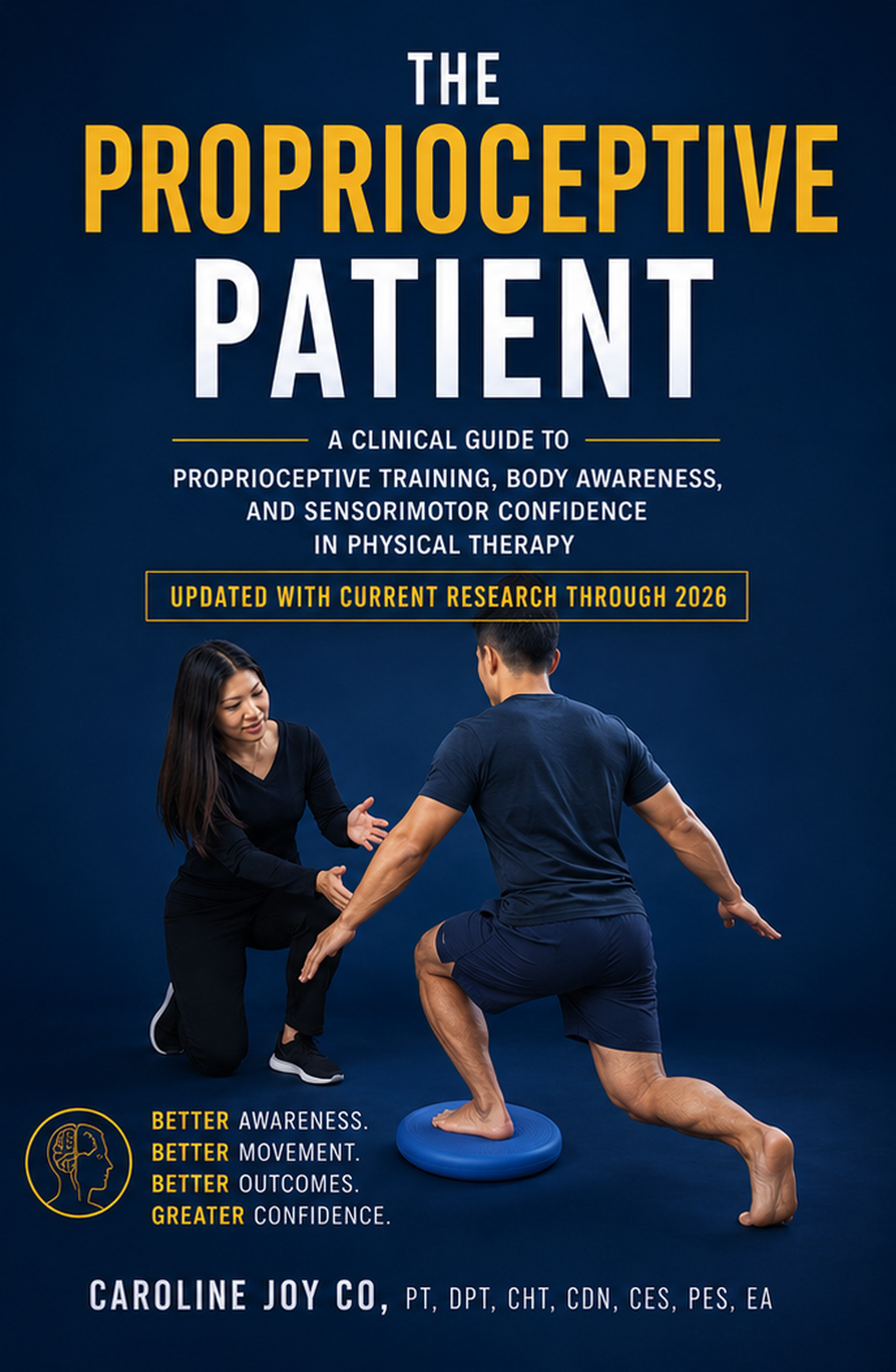
The Proprioceptive Patient is an evidence-informed clinical guide for physical therapists, rehabilitation professionals, educators, and students who want to think more precisely about proprioceptive training, body awareness, movement accuracy, and sensorimotor confidence.
Too often, proprioception is reduced to wobble boards, foam pads, eyes-closed balance drills, or vague documentation phrases such as “poor proprioception.” This book takes a deeper and more practical approach. It explains proprioception as a clinical reasoning category involving joint position sense, kinesthesia, force sense, load awareness, sensory reweighting, body schema, motor learning, and functional transfer.
Written in a clear, clinically grounded style, this book helps therapists ask better questions:
What does this patient need to sense?
When does the patient lose movement accuracy?
Is the problem position, movement, force, load, fear, fatigue, visual dependence, or confidence?
What feedback helps?
How should that feedback be faded?
What real-life task proves that learning has transferred?
Inside, readers will find a comprehensive discussion of proprioceptive rehabilitation across orthopedic, neurologic, pediatric, geriatric, chronic pain, and sports populations. Topics include ankle instability, ACL rehabilitation, shoulder and cervical proprioception, low back pain, stroke, peripheral neuropathy, Parkinson’s disease, multiple sclerosis, fall risk, chronic pain, pediatric body awareness, return to sport, technology-assisted feedback, and plan-of-care development.
The book also includes practical appendices with assessment templates, treatment progressions, documentation examples, patient education handouts, glossary terms, and quick-reference tables designed for real clinical use.
Part of The Clinical Reasoning in Physical Therapy Series, this volume connects current research with practical patient care and is updated with current research through 2026.
This book is for clinicians who want to move beyond generic “balance training” and develop more specific, thoughtful, and functional proprioceptive rehabilitation plans.
Because the goal is not simply to make exercises harder.
The goal is to help patients feel their bodies more clearly, move with greater accuracy, and return to life with more confidence.
Course Content
Table of Contents
-
The Proprioceptive Patient Course Content