

About Course
Topic: Clinical
CEU: 1.5 units
Contact Hours: 15 hours
A Clinical Guide to Assessment, Progressive Exercise, and Safer Mobility
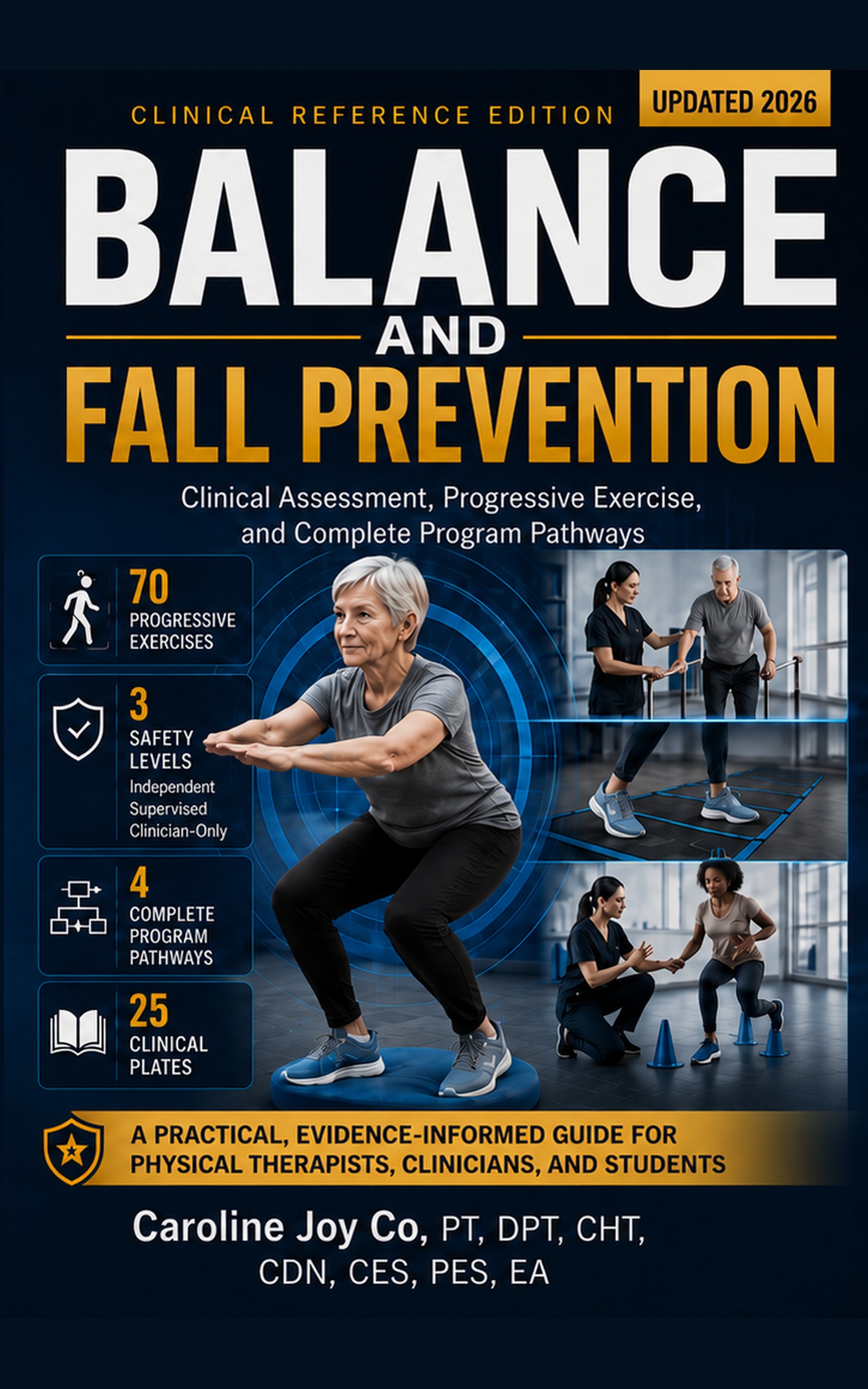
Balance and Fall Prevention is a clinical education course for rehabilitation professionals and students who evaluate fall risk, balance impairment, mobility limitations, safer movement, and progressive exercise programming.
This course reviews fall prevention as a multidimensional clinical problem. It emphasizes that falls are not explained by balance alone, but by the interaction of the person, task, environment, movement demands, medical factors, confidence, participation, and safety boundaries.
This course covers:
• Foundations of balance and fall risk
• Falls as a multidimensional clinical problem
• Postural control and how balance works
• Why balance fails during real movement
• Concern about falling, confidence, and activity restriction
• Screening, red flags, and referral
• History, fall reconstruction, and contextual risk
• Selecting and interpreting performance measures
• Movement analysis and mechanism-based classification
• Exercise prescription, challenge, dosage, and safety
• Foundational mobility, strength, and power
• Supported and static postural control
• Limits of stability and controlled weight shifting
• Transitions and anticipatory postural control
• Dynamic balance and multidirectional stepping
• Reactive balance and compensatory stepping
• Sensory integration and environmental challenge
• Gait adaptability, turning, and obstacles
• Cognitive-motor and dual-task training
• Transfers, floor mobility, and recovery after a fall
• Adapting the plan for frailty, neurologic conditions, musculoskeletal constraints, sensory issues, vestibular concerns, cognition, home safety, assistive devices, and caregivers
• Complete program pathways for beginner, community, neurologic, high-complexity, and higher-level balance needs
The purpose of this course is to help clinicians move beyond generic balance exercises and instead select safe, targeted, progressive interventions based on screening, fall history, movement analysis, mechanism classification, dosage, supervision needs, stop rules, and meaningful functional goals.
Course Content
Table of Contents
-
Balance and Fall Prevention Course Content